Behavior Tests Belong in the Credit Decision
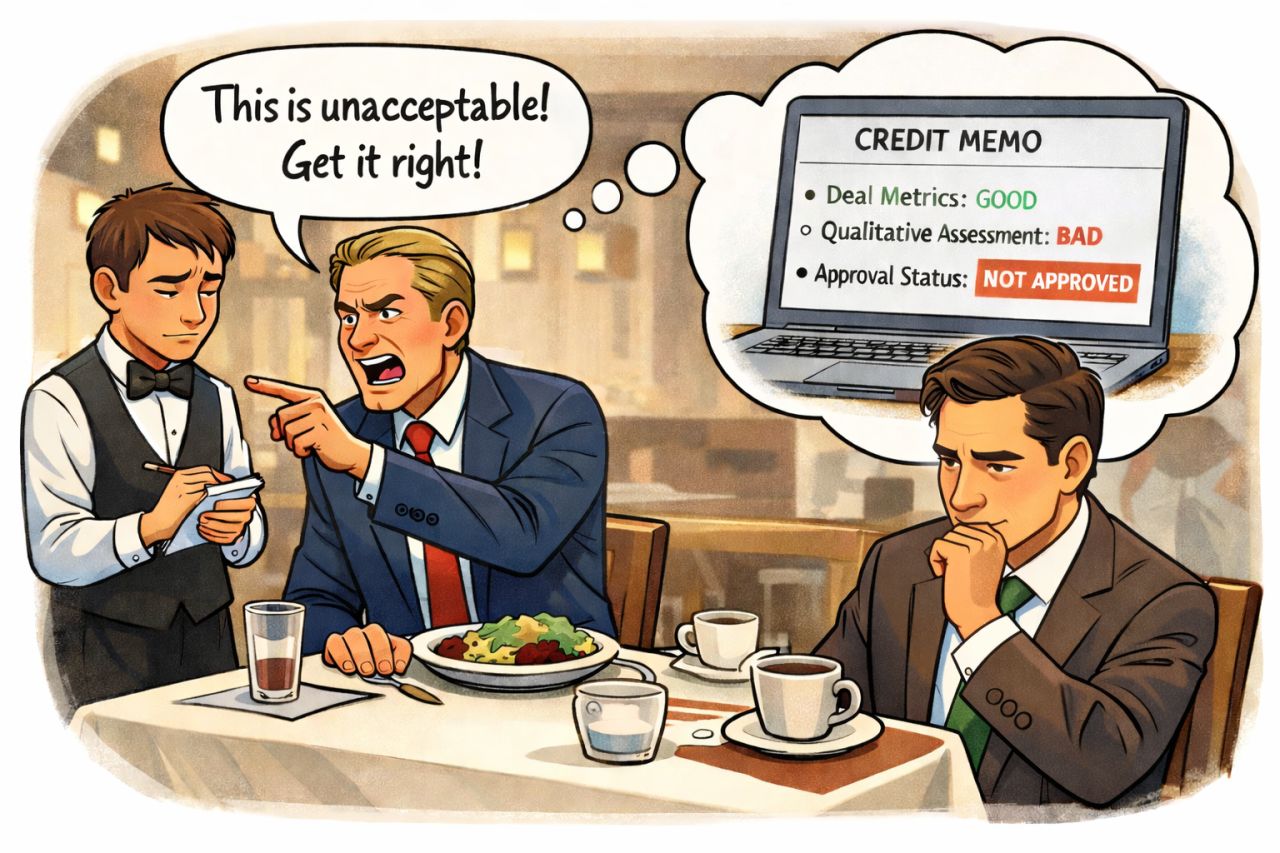
I can't stress enough the importance of behavior tests in funding decisions.
I've originated and underwritten billions of dollars of construction and transitional funding opportunities. Emphasis on "underwritten". Most of those deals never made it through the process. But many also did which – in hindsight – probably shouldn't have.
While this may seem controversial, believe me: if not already formalized, originators, LOs, underwriters, ICs and credit committees are already making behavioral judgements (and often poorly). In fact, appropriately formalizing the process would only serve to protect good sponsors more than punish them.
When I look back at the deals I originated and underwrote that actually survived COVID, rate shocks, refinancing freezes, and deal-specific failures, one of the most consistent patterns wasn't what the models said at closing. It was how the so-called intangibles weighed on performance.
Some objectively weaker deals (tighter leverage, thinner margins, more operational complexity, less experienced sponsors) performed materially better than "cleaner" ones. Why? Because the sponsors running them had the traits that matter when pressure stacks up: attention to detail, accountability, transparency, responsiveness, and the ability to stay constructive through trials.
Meanwhile, some of the best models I've seen fell apart because the people behind them couldn't handle friction or complexity. They were defensive. Evasive. Slow to disclose. Exhausting to work with. That doesn't show up in LTVs, or DSCRs, or debt yields, or ROAC. But it absolutely shows up in outcomes. One of the clearest early signals? The quality and completeness of the lender package: is it organized, cleanly labeled, easy to access and complete? This often reveals whether the sponsor respects people's time, understands how risk is evaluated (and thus what to look out for themselves), and is willing to be transparent before anyone is committed. An experienced underwriter or credit officer knows: for every missing answer, assume the worst.
Another: how does the sponsor treat others? Of course, this goes well beyond "manners". Have they missed past payments? Are they litigious? Did they fail to disclose? Do they do what they promise? The mistake underwriting teams make isn't ignoring behavior. Anyone acting as a good faith fiduciary will assess it mentally. The mistake is leaving it implicit, unstructured, and easy to override, especially in environments with allocation and fee pressure.
So instead of pretending these are "gut feels," it is far more effective and defensible to force structure onto the subjectives as a final approval step: scored and documented jointly by the people closest to the deal – origination, underwriting, processing. A consistent, team-assessed, final behavior test should always be part of the final approval process.
I believe the best way to do this is to incorporate behavioral characteristics into the credit model and risk pricing tools themselves. In Nabu, my proprietary credit matrix, portfolio synthesizing and auto-pricing DEMO, some behavioral considerations are hypothetically already considered, such as organization and response times, although state-by-state legal implications should be confirmed.