Stick Your Head in the Freezer
Why high-compute work scrambles your speech (and a two-minute reboot).
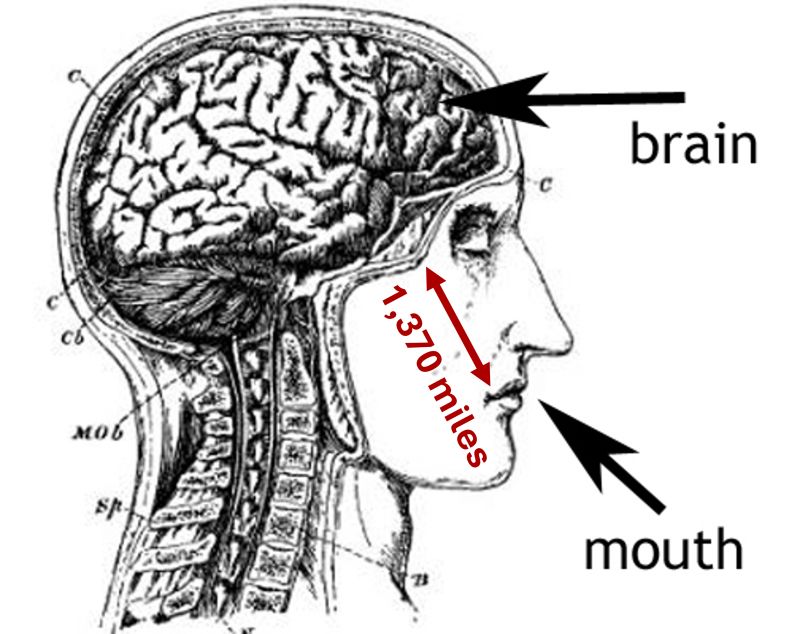
I know I'm not alone in this. Yesterday, I jumped from heavy modeling straight into a call and sounded like I'd just woken up from anesthesia, then (partially) "snapped awake" mid-conversation like someone with a split personality disorder. Truth is, I fumbled through that call big time. I short-circuited.
Sounding like you can't connect your brain to your mouth after high-compute work (modeling, coding, underwriting, design, legal/strategy chess) is completely normal. But good God, man (or woman)… take a walk or do some jumping jacks first. (Note to self.)
After shaking off that awkward conversation, I went down the "gotta know why" rabbit hole. All intuitive stuff, but if you want solutions, you first need to define causation.
My questions:
- Why are so many skilled operators bad at presenting themselves?
- Why do competent people often sound awkward or under-confident?
- What is the underlying CAUSE for the disconnect between high-compute tasks and verbal communication?
It's not that the entire engineer floor, lab or quant desk is on the spectrum. It's that high-compute work hogs the brain's metabolic budget (glucose, oxygen, ATP, dopamine) and pulls fuel away from language circuits like Broca's area and the temporal lobe. Working memory gets saturated, language networks downshift, neural rhythms stay in "logic mode," and half the subconscious is still running the previous task. Result: the thoughts are there, but the brain fumbles them on their way to the mouth.
It's like RAM on a PC. When one tab maxes out the system, switching doesn't free it immediately. The old processes are still running.
Elite operators think in structures, constraints, failure modes and contingencies. That's why the best problem-solvers are often the worst self-promoters. Their priority isn't "sound polished." It's "what facts matter for solving this?" In my case, half my brain was still stuck on: "How do I shift $11M from the pref slice to mezz and senior without nuking LP promote or failing DSCR screens?" None of that is linguistic.
So do what I didn't do (thanks, Andrew Huberman). You know the long-term stuff (sleep, diet, exercise, hydration; creatine is a game changer), but if you need a fast triage checklist to reboot your brain in under two minutes before a call or meeting, try these:
- Splash cold water or stick your head in the freezer
- Do some jumping jacks
- Shift your vision far away for 10 seconds
- Say one simple sentence out loud (to a person or a wall)
- Quick sip or snack for a glucose bump
And to all: keep this in mind next time a high-skill professional tied to a desk sounds a little… well… off. They're probably competent. They just didn't stick their head in the freezer before switching from calibrating models across thousands of dependencies or gaming out a high-stakes scenario to answering, "what makes you the right person for this assignment?"