The Polished Turd and The Revision Tax
and the risk of artificially expedited quality
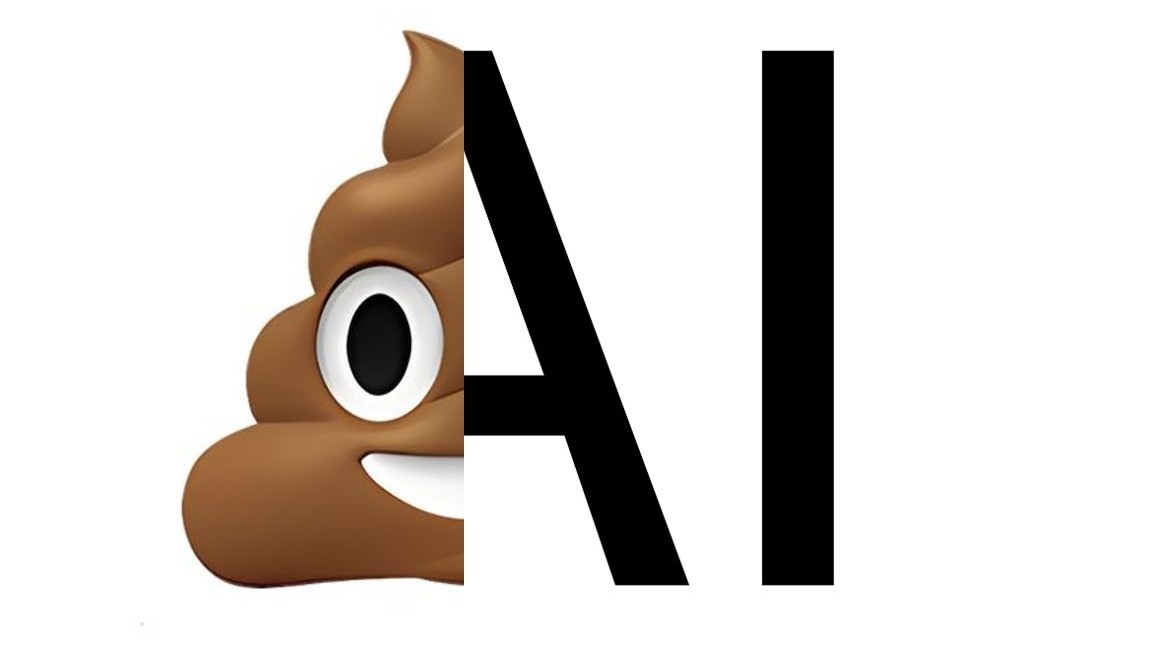
What follows is an observation, not a law, though if it holds it could probably be coined as one:
Polish, speed and comprehensiveness are as much a liability as an asset in any work product built to earn a decision.
First, an admission. I, like most professionals now days, use AI to assist me in several aspects of my work, including my writing (and virtually all of my formatting). You ever get stuck on a thought, say for example… this one:
“Hey, you know that movie with the actress who acted in that show we like about the thing with the tall guy who acted in…”
We’ve all been there. AI is great at helping us remember the movie title. It’s fantastic at helping us fill in the gaps, scan, reduce, concentrate. But with this comes a byproduct of AI that is also eroding both our collective raw talent – and our wisdom. And how does one obtain either? Experience. How does one get experience? By doing the work.
A work product used to be a measure of whether the person presenting it had done the work, and a measure of the quality of that work. The early adoption of Excel didn't make us work less or think less: back-of-napkin handshake underwriting turned into 15-tab models and calculus-ridden macros. The internet didn't just democratize information: it created pay gates, teased us with knowledge, and widened the gap between who knows and who doesn't. Technology, holistically, never eliminated work or diluted the value of human thinking that went into that work. It almost always created more of both. AI does the opposite. It is the first advancement in the lineage of technology that ultimately reduces both work and thinking, and that is precisely the problem.
In simpler times: it was safe to assume that work and thinking went into an artifact, to assume the artifact represented the quality of that work and thinking, and to assume that the more complete and polished the artifact, the higher the quality of what that artifact represented. A presentation, a model, a memo, a data room, a paper: each one used to carry that signal, and fairly. There have always been exceptions: snake oil and misrepresentation have always existed. But the heuristic held without a broad challenge, across centuries and civilizations, until now.
Now that a polished artifact is producible with a fraction of the work and speed, it has changed how we should measure work and thinking. And not only how. With whom, when, and where.
This is becoming harder to ignore. And so is the cost of missing, inaccurate or changing information.
The higher the aesthetic of an artifact, the more complete the answers to the questions the audience would have asked, or the faster all of it arrives: the more dangerous the artifact can become.
There are two risks here, and they pull in opposite directions on the same artifact.
The first: polish accelerates trust and buy-in faster than substance can be verified or trust bonds can be built. An artifact delivered with the confidence, completeness, and professional sheen that AI can now manufacture, and delivered fast, earns buy-in before anyone has tested whether the salient truth underneath it holds. Every downstream party stakes more on the artifact at the moment it lands than they would have staked on a slower, scrappier version of the same information that progressed naturally, and with more touchpoints. Speed and polish do not just present the case. They risk pre-closing the audience on it, leading to false positives.
The second: facts change. Sometimes through bad faith, sure, but more often through the normal course of a deal, a market, or a project evolving. When the facts change, the artifact should change with them — as should the buy-in. But updating the story naturally gets perceived as walking back something that was received and accepted as finished. You are no longer presenting; you are revising. And every revision to a once-perfect artifact reads as a story that has changed, not a fact that has changed. Credibility can erode on revision itself (the "Revision Tax"), not just on error or deliberate misrepresentation.
So the artifact is punished twice. It is trusted too quickly on the way in, and if things change (they almost always do), it is distrusted too quickly on the way out. The faster and more polished it was at delivery, the wider both swings can actually get.
The compounding risk: by the time the gap between the artifact and the reality surfaces, the credibility cost is no longer linear. It degrades across every node that took the polish at face value, every "Yes!" that came before anyone tested the substance or left room for things to change. And it lands hardest on the person whose name is on the artifact.
With AI, we may have found the inflection point of human value in the artifact of work product itself. But this doesn't change two critical and not-mutually-exclusive facts: polished turds are still turds, and change is not necessarily a credibility or quality event.
SLOW DOWN.